
Career Intel with Dan | The Restructuring Is the Strategy

Career Intel with Dan 📊🧠 | Your Weekly Brief
May 17-23, 2026
THE DEFINING PATTERN THIS WEEK
This week's story is not about a single company cutting jobs. It is about a structural pattern now operating across industries at the same time: companies explicitly tying workforce reductions to AI investment, governments beginning to formalize workforce protection policy, and a labor market that is stable at the macro level while quietly fracturing at the entry and operational levels. The week produced layoff announcements from tech, banking, software, and cloud infrastructure. It also produced a major policy action from California, a signed law in Colorado, a landmark platform launch from a major HR vendor, and new workforce data showing early-career confidence at historic lows. Each story is different. Together, they describe the same moment.
⚡ 1. Cisco, Intuit, Freshworks, and Cloudflare All Cut Jobs in the Same Week
Four companies across enterprise software, cloud infrastructure, and networking announced layoffs this week, each framing the cuts around AI-driven operational changes. Cisco eliminated fewer than 4,000 positions and redirected resources toward AI chips and security infrastructure - investors pushed the stock up more than 13% on the announcement. Intuit cut approximately 3,000 jobs, roughly 17% of its global workforce, as part of a strategic reset around AI-enabled products. Freshworks reduced headcount by 11%, about 500 jobs, citing rapid AI-driven changes in the software sector. Cloudflare cut more than 1,100 positions - nearly 20% of its workforce - as AI adoption reshapes its business model. None of the four framed their cuts as a response to financial distress.
Workers in enterprise software, cloud infrastructure, security, and operations roles face ongoing restructuring risk across these and adjacent companies
Cisco's 13% stock gain on its announcement day is the clearest signal yet that investors are actively rewarding AI-framed layoffs - creating a replicable template for other public employers
When companies serving small businesses, accountants, and internet infrastructure are all restructuring in the same week, the pattern is no longer sector-specific
💡 Every layer of the tech stack repriced itself this week. The companies involved are not struggling. They are reallocating. That distinction matters for how displaced workers position their transition and how advisors frame what is happening.
Impact: Immediate.
⚡ 2. India's Global Capability Centers Are Cutting Hiring Plans by 30% to 50%
The CEO of ANSR, a firm that helps multinationals set up global capability centers in India, told Reuters that companies are scaling back hiring plans in those centers by 30% to 50% in some cases. Projects once planned for more than 5,000 employees are being scoped down to closer to 2,000. AI adoption and geopolitical uncertainty are both named factors.
Indian tech, finance, engineering, and operations workers - especially those seeking roles in multinational service centers - face reduced opportunity
Employers globally are seeing the cost of offshore operations change as AI automates many of the tasks those centers were built to handle
The impact is harder to see than a layoff announcement: hiring plans that disappear before positions are ever posted
💡 AI does not only eliminate existing jobs. It also prevents future ones from being created. Reduced hiring pipelines are invisible in monthly unemployment data but have real effects on labor market entry for workers in affected geographies.
Impact: Emerging.
⚡ 3. ICIMS May 2026 Workforce Report: Entry-Level Hiring Is Breaking Down in Both Directions
Released May 21, the ICIMS Insights May 2026 Workforce Report draws on data from more than 691 million candidate profiles. The findings show a paradox: in April 2026, job openings reached a 12-month peak at 15% above baseline, yet application volume dropped 10% and hiring velocity registered zero growth. The pipeline is stalled. The report also found that 78% of entry-level job seekers ages 18 to 24 believe AI and automation are changing the volume and nature of entry-level roles. Only 19% of early-career candidates feel very confident in their careers. Nearly 29% report low or no career confidence. 44% now name job security as their top factor when evaluating a role.
Recent graduates and early-career candidates are the most directly affected - high demand exists, but access and process are blocking them
48% of entry-level job seekers still cite 'not hearing back after applying' as their top frustration, down only marginally from 50% in 2025
30% of early-career candidates are actively learning AI skills; 33% are expanding their job search scope; 29% are using AI tools in their search
💡 Demand is there. Candidates are adapting. The breakdown is in the process - ghosting, opaque AI-screening, and unclear expectations. For workforce organizations and career advisors, this is the most actionable data point of the week. The problem is fixable.
Impact: Immediate.
⚡ 4. Colorado Rewrites Its AI Hiring Law Days Before It Was Set to Take Effect
On May 14, Colorado Governor Jared Polis signed SB 26-189, which repeals and replaces the state's original 2024 AI Act less than two months before its June 30, 2026 effective date. The original law would have imposed broad system-level compliance obligations on any employer using high-risk AI in hiring or employment decisions. The replacement narrows that framework significantly: instead of certifying an entire AI system, employers must now disclose when AI is used in individual consequential employment decisions and explain adverse outcomes. The law is enforceable only by the Colorado attorney general - no private lawsuits. Key obligations for employers take effect January 1, 2027.
Employers in Colorado using AI tools in hiring, promotion, performance management, or termination need to review their disclosure practices before January 2027
Vendors selling AI-based HR tools need to understand how liability is now split between developer and deployer
Other states are watching Colorado's regulatory evolution - this rewrite is likely to influence what comes next nationally
💡 State AI employment regulation is real, contested, and still forming. Colorado's last-minute rewrite shows how much pressure employers applied - and it also shows that some form of AI hiring accountability law is going to land. The question is no longer whether, but what form it takes.
Impact: Emerging. Employer obligations take effect January 1, 2027.
⚡ 5. California Signs an Executive Order Directing State-Level Planning for AI Workforce Disruption
California Governor Gavin Newsom signed an executive order directing state agencies, universities, economists, labor experts, and industry leaders to prepare a coordinated response to AI's effects on workers, small businesses, and communities. The order calls for exploring severance standards, employment insurance updates, worker transition supports, expanded training access, and improved labor market monitoring. It does not impose new employer obligations - it is a planning directive.
California workers, small businesses, and workforce agencies are the primary subjects of the planning process
Workforce development organizations nationally can use this as a policy template and funding alignment signal
The order reflects a broader state-level trend: AI workforce disruption is moving from conversation to formal government planning
💡 California is both the center of AI development and one of the largest labor markets in the country. When its governor orders state agencies to plan for AI workforce disruption, that is not a symbolic gesture. It is the policy architecture that precedes legislation.
Impact: Emerging to long-term.
⚡ 6. Google I/O Announces Agentic AI Built Directly Into Workplace Tools
At Google I/O this week, Google announced Gemini Omni and Gemini 3.5 alongside expanded agentic capabilities across Google Workspace - Docs, Sheets, Gmail, and Meet. The framing shifted from 'tools that help you write' to 'agents that help you act.' Multi-step, autonomous task execution is now the design goal across Workspace products for knowledge workers.
Knowledge workers, developers, small businesses, and organizations on Google Workspace are the primary affected group
Job expectations for productivity, digital literacy, and workflow management are being reset by these capability changes
Employers already on the Workspace stack will need to revisit what 'standard proficiency' means for roles that use these tools daily
💡 The workforce implication of agentic AI in mainstream productivity tools is not a feature update. It is a change in baseline job expectations. Workers who do not develop fluency with autonomous AI workflows will face a growing capability gap compared to those who do.
Impact: Emerging. Rollout is underway across paid Workspace tiers.
⚡ 7. Cornerstone Launches 'Workforce AI' - Skills Tracking Without Employee Self-Reporting
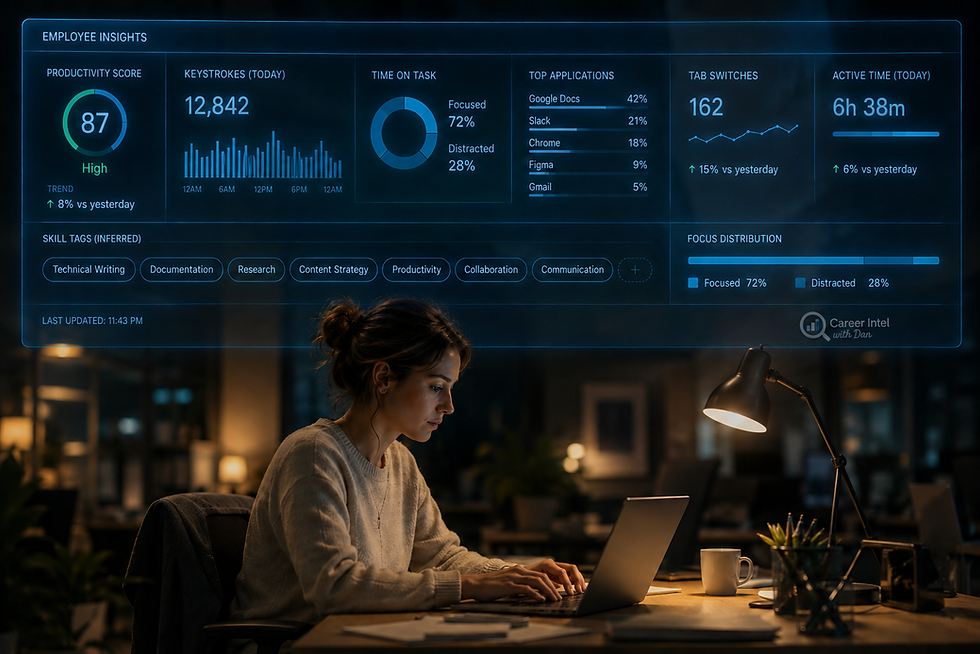
Talent management company Cornerstone officially launched its Workforce AI enterprise platform, which uses a proprietary 'People Graph' to infer employee skills from actual daily work activity rather than self-reported resumes or manager reviews. The system reads signals across enterprise tools and automatically maps skill progression over time. The platform bypassed private preview and went directly to general availability with active enterprise clients.
HR professionals, corporate L&D teams, and employees at large enterprises using Cornerstone are affected immediately
Internal mobility and promotion decisions at adopting organizations will increasingly be shaped by algorithmic skill inference rather than traditional performance reviews
Workers at organizations adopting this platform should understand that their workflow data is now being used to assess readiness for advancement
💡 This is a structural shift in how large employers define and measure talent. When your daily work activity automatically populates your skills profile, the line between job performance and hiring eligibility becomes continuous. That changes the relationship between workers and their employers in ways most workers are not yet aware of.
Impact: Immediate. Platform is in general availability now.
⚡ 8. Cybersecurity Roles Are Being Rewritten Around AI Threat Defense
Data published this week by Hack The Box and ISC2 shows that 'AI penetration testing' and defense against prompt injection attacks have rapidly become top enterprise workforce training priorities. Prompt injection attacks now comprise nearly 30% of active enterprise threats. The data shows a growing split between IT security teams that have operationalized AI defense capabilities and those that have not.
IT security professionals, risk management leaders, and enterprise compliance teams face the steepest and fastest skills shift
Organizations that have not updated their security training to include AI threat vectors face real operational and liability risk
Job descriptions for technical security roles are being rewritten - workers relying on pre-AI certifications are increasingly out of step with employer expectations
💡 Security professionals are no longer only managing code vulnerabilities. They are now responsible for the behavior, inputs, and boundaries of autonomous AI agents operating inside their organizations. That is a materially different job, and most existing training pipelines have not caught up.
Impact: Emerging and accelerating.
⚡ 9. DeepMind Workers Push for Union Representation Over AI Ethics and Defense Contracts
Google DeepMind agreed to formal talks with UK unions after London-based workers organized around concerns about how DeepMind's AI systems may be used by governments for defense and intelligence applications. The push represents an emerging category of labor relations: employee voice over acceptable use of AI, not just wages or working conditions.
AI researchers, engineers, and tech employees at organizations with defense or government AI contracts are the most relevant group
Employers building AI systems for sensitive applications face increasing pressure from their own workforce, not only from regulators
Labor relations in the AI sector are expanding beyond compensation into questions of ethics, deployment, and institutional accountability
💡 AI workforce issues are not limited to layoffs and skills gaps. Employee voice, ethics, defense contracts, and acceptable-use policy are becoming labor relations issues. Organizations that treat AI governance as a leadership-only concern are underestimating where resistance will come from.
Impact: Emerging.
⚡ 10. Singapore Pushes Banks to Use AI for Better Jobs - Not Just Lower Headcount
Singapore's Deputy Prime Minister publicly urged financial firms to use AI for job quality, worker retraining, and higher-value role creation - not only cost reduction. The remarks followed Standard Chartered's AI-linked job-cut announcement and were directed specifically at banking sector employers.
Financial-sector employers and workers in Singapore and other major banking hubs are the primary audience
The message offers a direct policy counterweight to the 'efficiency first' framing dominant in most corporate AI communications
Workforce organizations in other markets can use this framing - AI adoption paired with reskilling investment - in employer engagement and advocacy
💡 Most governments have been reactive on AI and workforce. Singapore is being prescriptive: adopt AI, but design for job quality, not just margin improvement. That is a different standard, and it is worth watching whether other governments follow it or whether cost reduction remains the default.
Impact: Emerging.
⚡ 11. U.S. Macro Labor Market Remains Stable - But Underneath the Surface, Conditions Are Tight
U.S. initial jobless claims fell to 209,000 for the week ending May 16, remaining historically low despite the high-profile AI-related tech layoffs of recent weeks. April payrolls rose by 115,000, and unemployment held at 4.3%, with gains concentrated in health care, transportation and warehousing, and retail. However, economists note that private-sector employment indicators weakened, and the overall market continues to show a 'low-hire, low-fire' pattern: stable at the surface, sluggish underneath.
Job seekers and career changers face a market where openings exist but hiring decisions are slow and cautious
Displaced workers from AI-related cuts have fewer landing spots than in a more active labor market
Workforce organizations should expect longer case durations and more complex placement challenges even as headline numbers look calm
💡 Even before accounting for AI displacement, the labor market is running slow. That makes AI-related restructuring more consequential - not because it is catastrophic on its own, but because the system meant to absorb those workers is already operating below capacity.
Impact: Immediate for job seekers and workforce organizations.
Stay curious. Stay current.
Dan Lopez | Career Intel with Dan | danscareercorner.com


Comments