
Career Intel with Dan | The Definition of Qualified Is Changing. The Money and the Laws Are Catching Up.

Career Intel with Dan | Your Weekly Brief
THE DEFINING PATTERN THIS WEEK
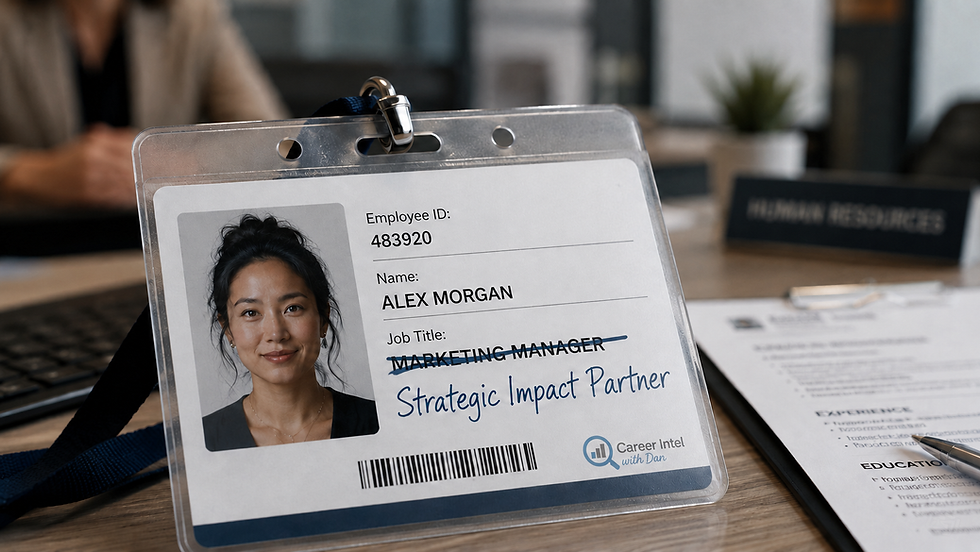
The clearest signal this week is not replacement - it is reallocation. Companies are trimming in established areas and investing in AI infrastructure, AI-native roles, and agentic deployment. The entry-level job market is contracting. The definition of qualified is shifting faster than most training programs can track. And for the first time, both a federal funding opportunity and state-level legal requirements arrived in the same week, giving workforce organizations something concrete to act on.
1. Tech Sector Layoffs Keep Coming-and the Pattern Is the Same Every Time
Another heavy week of cuts. Meta confirmed roughly 8,000 employees will begin losing jobs on May 20, with more rounds planned for the rest of the year. Cisco cut approximately 4,000 roles. LinkedIn announced cuts of around 875 employees. ZoomInfo eliminated 600 positions - about 20% of its workforce - as AI models erode its core database business. GitLab restructured explicitly around what it is calling the agentic era, flattening management layers in favor of smaller AI-assisted units. Combined with cuts already logged earlier in May from Cloudflare (1,100+), PayPal (~4,800), Upwork (25%), Coinbase (14%), and BILL (30%), the 2026 tech layoff total has crossed 128,000 and is running at roughly 1,000 people per day. The monthly Challenger, Gray & Christmas report showed AI led all announced reasons for job cuts in April, accounting for 26% of cuts that month.
These are not companies cutting to survive - they are profitable companies cutting to fund a different kind of growth
The roles being eliminated are not coming back in the same form; the roles being added require AI-native development, data engineering, agentic workflow design, and model operations
The 2026 wave is structurally different from 2022: that wave was overhiring correction; this one is deliberate reallocation toward AI infrastructure
💡 The distinction between financial distress cuts and AI-reallocation cuts matters for job seekers. The advice is different, the target roles are different, and the timeline for recovery looks different.
2. The AI-Washing Problem — Because Not Every Layoff Is What It Claims to Be
A Resume.org survey found that 59% of companies admit they lean on AI as an explanation for hiring freezes and layoffs because it plays better with investors and boards than citing business pressure or financial underperformance. Only 9% say AI has fully replaced roles outright. OpenAI CEO Sam Altman acknowledged the pattern publicly, noting that some companies blame AI for cuts they would have made regardless.
Displaced workers trying to understand whether their field is genuinely at structural risk or caught in a narrative
Career advisors helping clients process displacement and plan next steps
Workers making retraining decisions based on stated vs. actual reasons for job loss
💡 If a worker believes their role was automated when it was actually cut for unrelated reasons, they may make different and potentially wrong decisions about retraining. Help clients think critically about the stated reason, not just accept it.
3. GM's Skills Swap-This Is a Job Design Story, Not Just a Layoff Story
General Motors cut roughly 500-600 IT workers while continuing to hire for AI-native roles: data engineering, cloud engineering, analytics, model development, prompt engineering, and AI workflow design. GM is not reducing its technical workforce. It is reshaping what technical competence looks like inside existing departments.
Mid-career IT professionals with generalized technical backgrounds are the most exposed
Employers across industries are quietly changing what qualified means without changing the job titles
Workers who show AI fluency in a specific workflow have an edge over those who only claim general familiarity
💡 The question is no longer whether your industry will be affected. It is whether your skills are defined in the language employers are now using to hire.
4. Entry-Level Hiring Is Quietly Contracting-and the Hiring Pipeline Is Jammed
A D2L workplace survey found that 30% of HR leaders are shifting talent acquisition away from entry-level candidates toward mid-level workers, using AI to cover operational gaps. About 56% reported that basic administrative and analytical tasks traditionally used to develop junior staff are now fully automated. Separately, AI-assisted job applications have flooded hiring pipelines. More than half of job seekers are now using generative AI to produce and tailor applications, causing a reported 93% spike in application volume. The response from employers: 87% are deploying aggressive AI screening tools to filter the volume. The combined effect has compressed offer rates in white-collar roles to roughly 0.5% of applicants, with median time-to-hire stretching to 38-42 days.
Recent graduates and early-career job seekers in administrative, analytical, and operational functions are the most immediately affected
Corporate L&D teams face the longer-term question of where junior talent pipelines come from if traditional entry rungs are removed
The traditional ladder - get hired, learn the job, advance - is being disrupted at both ends simultaneously
💡 For workforce organizations: the preparation bar for entry-level clients has risen sharply. A clean resume is not enough. Clients need to understand how to stand out in a pool that has grown dramatically in volume while narrowing in differentiation.
5. Microsoft Work Trend Index: Workers Are Ahead of Their Employers-and That Is a Problem
Microsoft's 2026 Work Trend Index found that workers are outpacing their organizations in AI adoption, but only 13% of companies currently reward or recognize employees for AI experimentation. AI agent use in Microsoft 365 surged 15x year-over-year - a pace most organizations have not built systems to measure, manage, or support.
Knowledge workers and managers across industries, particularly in organizations that have deployed AI tools without policy frameworks or incentive structures
Employers face productivity gains being absorbed by the company without benefit to the individual, increasing burnout and attrition risk
HR teams need to build recognition and reward systems around AI adoption, not just announce it
💡 If you want real AI adoption, you have to build systems that reward it. The gap between what workers are doing with AI on their own and what organizations are set up to recognize is where value is leaking.
6. Enterprise AI Is Shifting from Tools to Workers
Three significant enterprise AI deployments this week signal a shift from AI as assistant to AI as autonomous worker across full business processes.
PwC announced deployment of Claude across 30,000 U.S. consultants, reporting delivery improvements of up to 70% on client engagements. Cited results include insurance underwriting cycles compressed from ten weeks to ten days and an HR transformation turned around with a working prototype in a single week. Advocate Health, one of the largest U.S. health systems with 167,000 employees, is building toward full-scale deployment.
SAP unveiled its Autonomous Enterprise vision at Sapphire 2026, introducing 50+ domain-specific AI agents to run end-to-end processes across finance, supply chain, procurement, HR, and customer experience. OpenAI created a new OpenAI Deployment Company, backed by more than $4 billion in initial investment, to accelerate corporate AI adoption.
Finance, HR, operations, and supply chain professionals at enterprise organizations are affected - this extends well beyond tech workers
When systems running accounting, procurement, and HR decisions operate autonomously, mid-level white-collar professionals who assumed AI was primarily a tech-sector issue need to reconsider
PwC's 70% delivery improvement figure is the kind of number that accelerates client pressure across the entire consulting industry
💡 Agentic AI is entering the enterprise not through the IT department but through the CFO and COO. That changes who needs to pay attention.
7. Congress Introduces Workforce Transparency Act
Senators Mark Warner (D-VA) and Ted Budd (R-NC) introduced the Workforce Transparency Act, a bipartisan bill directing the Department of Labor to collect voluntary, anonymized employer data on AI's workforce effects - including task-level AI use, geographic distribution, and changes over time - and make it publicly available. The bill has support from Anthropic, Google, Microsoft, and OpenAI. Congress is also considering related proposals: the AI-Related Job Impacts Clarity Act would require mandatory quarterly reporting on AI-attributed layoffs and retraining, and the AI Workforce PREPARE Act would amend the WARN Act to require disclosure when AI was a substantial factor in a mass layoff.
Workforce development organizations would gain a national dataset to design evidence-based programs
Employers who participate shape how AI's workforce effects are understood and reported at the federal level
A parallel bill would make disclosure mandatory and require WARN Act notices when AI drives mass layoffs
💡 Right now, workforce programs are being asked to respond to a problem nobody can fully measure. This bill starts to fix that - if it passes in an election year.
8. EDA Opens $25 Million AI Upskill Accelerator — Workforce Boards Are Eligible to Lead
On May 11, the U.S. Economic Development Administration announced a $25 million competitive grant program for AI workforce training. Awards range from $1 million to $8 million for 24-36 month projects. The defining requirement: the lead applicant must convene an employer-led sectoral partnership with real hiring commitments attached - not just letters of support. Workforce boards, EDOs, community colleges, and nonprofits are all eligible as lead entities. Applications are open now at eda.gov/ai-upskill.
WDBs already running sectoral partnership models are well-positioned to compete
Applicants must show AI adoption is already reshaping their regional industry, not just predict it will
Awards require measurable workforce outcomes - training completion and job placement, not just seat counts
💡 This is one of the most directly actionable funding opportunities workforce organizations have seen this year. The sectoral partnership model is one many WDBs already run. Applications are open now.
9. Connecticut Is About to Sign the Nation's Most Comprehensive AI Employment Law
Connecticut's legislature passed Senate Bill 5, the AI Responsibility and Transparency Act, and sent it to Governor Lamont's desk. The governor's office indicated he intends to sign it. The law requires employers to notify applicants and employees when AI is used as a substantial factor in hiring, promotion, discipline, or termination decisions. It amends the state's anti-discrimination statutes to specify that using an automated decision tool is not a legal defense against a discrimination claim.
Multi-state employers need to audit their AI-assisted hiring tools now, ahead of the October 2026 effective date
HR and legal teams will need disclosure policies and documentation processes in place before fall
AI software vendors selling into HR face new compliance obligations for tools deployed in Connecticut
💡 Illinois and NYC already have rules in place. Connecticut goes further. At some point, a patchwork of 10 state laws becomes the pressure that produces a federal one.
10. AFL-CIO Polling: Most Workers Want AI Protections-and That Number Is Not Small
AFL-CIO released polling showing that more than 90% of workers support job and privacy protections related to AI. Strong majorities favor human oversight in employment decisions and want transparency about when and how AI tools are used to monitor, schedule, or manage them.
Workers in sectors where AI monitoring and management tools are already deployed face the most immediate impact - logistics, retail, call centers, healthcare, and professional services
Employers rolling out AI monitoring and performance tools without employee communication frameworks are building toward friction
Workforce organizations can use this data to support conversations with clients about their rights when AI is used to evaluate or manage their work
💡 AI in the workplace is becoming a labor relations issue, not just an HR or technology question. The 90% figure is not a fringe concern - it is a broad workforce expectation.
11. Coursera and Udemy Merge in a $2.5 Billion Bet on AI Training Demand
Coursera and Udemy completed a $2.5 billion all-stock merger, creating one of the largest online learning platforms in the market at a moment when AI course demand is accelerating sharply. The deal reflects how quickly AI upskilling has moved from specialty content to mainstream infrastructure.
Workers seeking reskilling gain access to a significantly larger, consolidated course catalog
Employers buying training benefits will see more competitive pricing and bundling options
Publicly funded training programs will face higher expectations around job-connected outcomes as commercial alternatives scale
💡 A commercial platform this size does volume. What it cannot do is connect a specific worker to a local employer with a verified credential and a job offer. That is still the work.
Bottom Line
The clearest pattern this week is not replacement - it is reallocation. Companies are trimming in established areas and investing in AI infrastructure, AI-native roles, and agentic deployment. The entry-level job market is contracting. The definition of qualified is shifting faster than most training programs can track.
For workers, role-specific AI fluency matters more than general AI familiarity. Knowing AI exists is not a differentiator. Being able to show how you use it, what you use it for, and what you can do with it - that is.
For workforce organizations, there are two concrete, time-sensitive opportunities this week: the EDA $25 million upskill grant at eda.gov/ai-upskill, and the compliance timeline on Connecticut's AI employment law, which affects any organization doing multi-state hiring.
Stay curious. Stay current.



Comments